
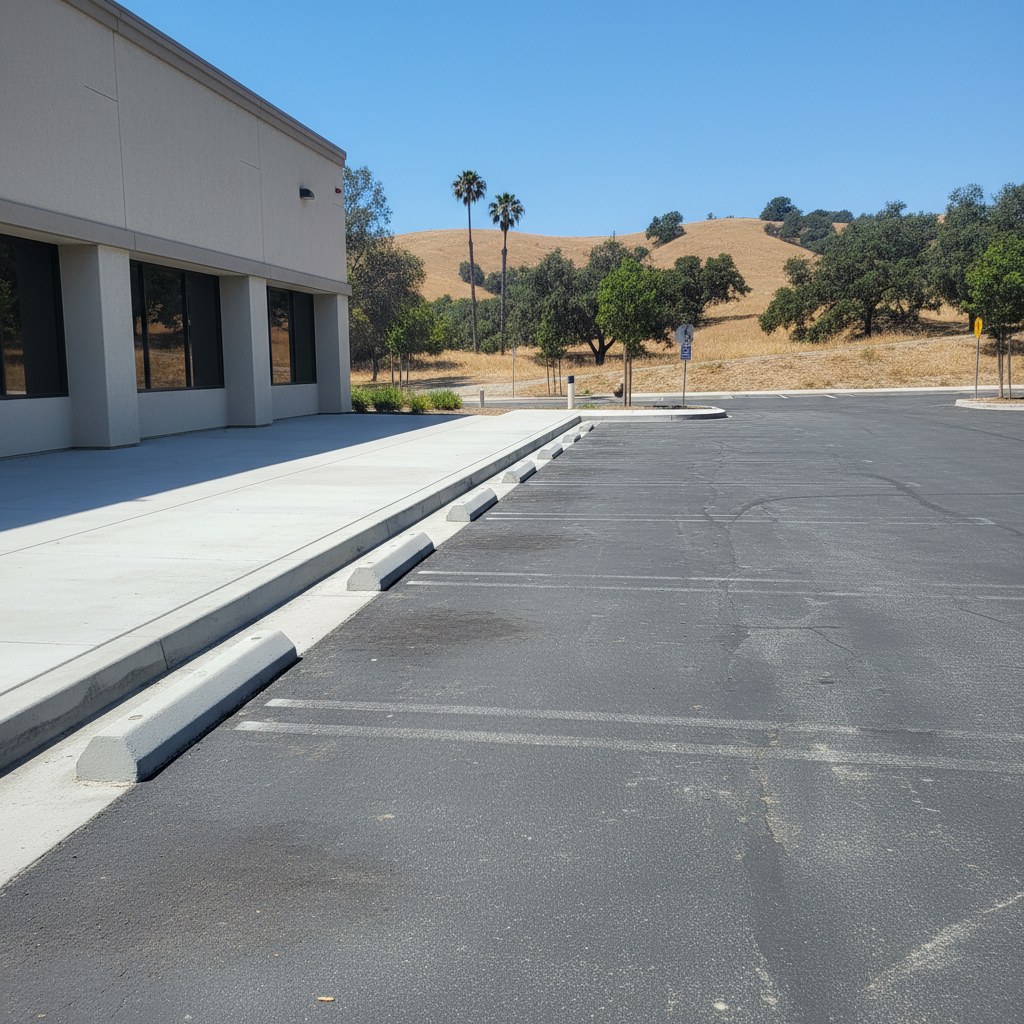
Concrete looks simple once it's poured and finished smooth. Underneath that slab is where most of the decisions get made, and most of the mistakes happen where you can't see them. If you're about to spend money on a driveway, a patio, a retaining wall, or a new garage pad in Antioch, the contractor you pick matters more than the pretty finish they show you in photos.
What's actually under your yard
A lot of East County, including Antioch, sits on clay-heavy soil. It's the same adobe-type clay that shows up in older parts of Contra Costa County. Dry, it's hard as a brick. Wet, during a normal rainy season from November through March, it swells and shifts. A slab poured directly on untouched native clay will move with it, and that movement shows up as cracking within a year or two, sometimes faster.
A contractor who knows the ground here will excavate down, compact a proper base, usually 4 to 6 inches of class II road base, and compact it in lifts rather than dumping it all at once. That base is what keeps the slab from telegraphing every swing in the clay underneath it. Skipping it, or compacting it once instead of in layers, is one of the most common corners cut, and it's invisible once the concrete is down.
The weather window you're actually working with
Antioch summers run hot and dry, often into the upper 90s from June through September, with the Delta breeze cooling things in the evening but not doing much for a slab curing in direct afternoon sun. Concrete that cures too fast gets surface cracking and a weaker top layer. A contractor working in July should be wetting the surface or using a curing compound, not just pouring and walking away.
Winter works against you differently. Rain delays are normal from late fall through early spring, and nobody should be pouring on soil that's saturated or finishing concrete in active rain. If a bid promises a start date regardless of forecast, that's a flag, not a selling point.
License, insurance, and who pulls the permit
In California, concrete flatwork and structural work falls under a C-8 contractor's license through the CSLB. Ask for the license number and look it up yourself, it takes two minutes on the state's website and tells you if it's active, what classification it covers, and whether there are complaints on file. Ask for proof of general liability and workers' comp too. If a worker gets hurt on your property and the crew isn't covered, that liability can land on you.
For most driveway, patio, and foundation work in Antioch, a permit goes through the city's building division, and unincorporated areas nearby go through Contra Costa County instead. Inspections typically happen at two points: after the forms and rebar are set but before the pour, and sometimes again after. A contractor who tells you permits aren't necessary for a driveway replacement or a new slab is either wrong or hoping you won't ask. If your property has an HOA, which is common in the newer subdivisions around Lone Tree and Deer Valley, you may also need a design approval before work starts, separate from the city permit.
What a lowball bid usually leaves out
Three bids can look close on price and be nowhere close on what's included. The differences are usually in the parts you can't see once it's poured:
- Mix strength. Residential flatwork should generally run 3,500 PSI or higher here, not the lower-strength mix sometimes used for non-structural work. Ask what PSI is in the bid.
- Reinforcement. Wire mesh is cheaper than rebar and tends to sink to the bottom of the pour if nobody chairs it up properly, which defeats the purpose. For driveways and anything load-bearing, #3 or #4 rebar on a grid, typically 18 to 24 inches on center, holds up better over time.
- Thickness. A standard walkway might be 4 inches. A driveway that sees vehicle weight should be closer to 5, sometimes more near garage pads. Thinner concrete flexes more and cracks sooner.
- Control joints. These get cut within 24 hours of the pour, while the concrete is still green, spaced roughly every 8 to 10 feet on a typical slab. They give the concrete a place to crack on purpose instead of cracking wherever it wants. Skipping this step or cutting joints too late means random cracks later.
- Drainage slope. Flatwork near a house should pitch away from the foundation, generally around a 2 percent grade. On a lot that's already flat or graded wrong, water pools against the house instead of running to the street.
None of this shows up in a photo of the finished patio. It shows up two winters later.
Older neighborhoods versus newer subdivisions
A job in Rivertown or one of Antioch's older established streets isn't the same as a job in a subdivision built in the last 20 years. Older lots often have unknown fill, old sewer laterals, tree roots, or a previous owner's patchwork concrete work under the surface. A contractor should check before pricing, not after hitting something mid-dig. Newer subdivisions tend to have more consistent compacted fill from when the tract was built, but HOA rules and tighter setbacks mean the paperwork side takes more attention.
Questions worth asking before you sign anything
Ask how many days before you can walk on the new concrete, and how many before you can drive on it. The honest answer is usually about 7 days for vehicle weight and closer to 28 days for full strength, even though it looks finished the day after the pour. Anyone promising you can park a car on it the next day either doesn't understand the cure time or isn't planning to be around when it cracks.
Ask for a written contract with the PSI, thickness, rebar or mesh spec, and start and completion window spelled out, not just a total price. Ask who pulls the permit and who's responsible for scheduling inspections. And ask what happens if it rains mid-project, because in this area, eventually it will.
We've done driveways, patios, foundations, and retaining walls across Antioch and the surrounding towns long enough to know which corners get cut and what they cost homeowners later. If you want a straight answer on what your project actually needs before you sign anything, take a look at Granite Concrete Company and get a bid that spells out the parts other contractors leave off the page.